
A Russian’s View of Spiritual Abandonment
The Road from Damascus: From Recent Correspondence
Below we present points from correspondence of the last two months, anonymously and arranged thematically as questions and answers.
Q: What are your thoughts as we enter 2013?
A: My thoughts turn both ahead and also back to 2014, the centenary of the great European suicide. This was the disaster of 1914, from which Europe has not only not recovered, but from which it has fallen and falls ever further. The consequences of that War and its disastrous Treaty of Versailles were numerous, not least the guarantee of a Second War, but also:
If in the First World War Russia had defeated Germany and Austro-Hungary, as it was about to in 1917, the whole of world history would have been different. The Jews, who had already suffered terrible pogroms in Vienna and Berlin before that War (much worse than those in Poland, the western Ukraine and Bessarabia), would have been protected. In turn, there would have been no holocaust and no reason to establish Israel. The whole Middle East quagmire that exists today and the results of the manipulative Western divisions of the Ottoman Empire would not have come into existence.
There would have been the promised independence for Poland, Finland and the Baltic States, but with protection for their Orthodox minorities, autonomy for the Ukraine, Belarus, Georgia, Armenia and other peoples. There would never have been the disastrous centralism of the Soviet period. There would have been freedom at last for Carpatho-Russia, protection for the Orthodox Balkans, freedom for Constantinople and liturgies in the Church of the Holy Wisdom, and protection for Orthodox Asia Minor. Both the Armenians and Greeks in what later became Turkey would have been protected from genocide. No masonic Greeks and Romanians would have catholicised the Church calendar and split the Diaspora. There would have been no Turkish invasion and occupation of Cyprus and the Orthodox of the former Ottoman Empire, as in Syria, would have been protected.
Q: That brings us to today’s situation in the Middle East?
A: Precisely. After the recent wars lost in Iraq and Afghanistan and staring bankruptcy in the face, the West now faces the disastrous consequences of its meddling in Yugoslavia, Tunisia, Libya, Egypt and perhaps in Bahrain. The ‘blowback’ is enormous, as we see in Mali. Now come the consequences of meddling in the rest of the Ottoman Empire – in Turkey and Syria, not forgetting the Kurds, so mistreated by European colonialism in the carve-up of the Ottoman Empire after the First World War.
It is said that members of the French and British special services have already been killed in Syria, though this has been hushed up by the governments involved. There are 1500 members of US Sp3ecial Forces in the Jordan alone. Who knows? The 65,000 terrorist mercenaries in Syria belong to 29 different nationalities, according to the UN. Recently many Tunisians, another 5,000, have been flown into Syria and armed by the CIA, financed by the oil monarchies, especially by anti-Iranian Qatar and Saudi Arabia. Saudi Arabia has made space in some of its prisons and sent criminals to fight in Syria. It is curious that the only well-known European politician who has spoken out against the allying of the West with Muslim terrorists in Syria is the French Marine Le Pen. She has had the courage to say that the Western-encouraged ‘Arab spring has been followed by the Islamist winter’. Interestingly also, no-one in the West has dared to speak against support for the Syrian people by China, only for the support offered by Russia.
Q: Why has the West spoken against Russian support and not against Chinese support?
A: China is due to become the world’s greatest economic power within the next ten years. It may also by then have become the world’s largest Christian country. The anti-Christian West is frightened of this. It is less frightened of Russia, which it still associates with the decadence of the 1990s. This is a mistake. Today’s Russia has been rising since 2000. In 2000 Russia had its revelation, since when it has been on the road from Damascus; the West is still on the road to Damascus, it has still not had its revelation, which it is purposely avoiding. Russia and the West have already passed each other by on that road, heading in opposite directions, Russia heading towards Jerusalem, the West heading towards Babylon.
Q: From a spiritual viewpoint, why are the events in Syria so important?
A: Because Syria is very close to Jerusalem and, spiritually, Jerusalem is the centre of the world, the beginning – and the end.
Q: If we can come back to what you said originally about Russia’s potential victory in the First World War, why did it not win?
A: The Western aims in that War were twofold – the defeat of Germany and then of Russia. The Western elites knew perfectly well that Russia, unimpeded, would become the World’s greatest power by 1950 and its Orthodox Christian culture would then stand at the centre of Europe and of the world. The Russian Empire was already in advance of much of the West by 1914, and not only in terms of agricultural and industrial production. For example, 85% of its inhabitants were literate by 1917, thanks largely to the stupendous achievements of the last Tsar.
But Russia had to be destroyed before it destroyed Germany and then freed the Slav peoples from Austro-Hungarian oppression and the Orthodox peoples of the Near and Middle East from Ottoman oppression. So Rasputin, the symbol of the Russian Orthodox people, was murdered by the British (as we now know from Andrew Cook’s book, ‘To Kill Rasputin’) and the Revolution was organised by the British ambassador to St Petersburg, Sir George Buchanan, with the open support of Lord Milner, Balfour and Lloyd George. Russia could be brought down, because it was no longer necessary to the Allies – they knew that the USA would enter the War on their side, as soon as Russia was destroyed.
Q: Is there any chance that today’s Russian Federation could re-establish a sort of Orthodox Empire, as it could have done, had it been victorious in 1917?
A: Every Empire has problems. European models of Empire were too centralised, which provoked rejection on their fringes. In turn, the Soviet Union was a far more extreme and oppressive form of European Empire. In the territories of the pre-1917 Russian Empire, we should be hoping to see the emergence of a looser and voluntary Eurasian Confederation, not a Union or an Empire. However, at present only Belarus and Kazakhstan are taking part in this organisation. There is far to go.
Q: Eastern Europeans – though not necessarily their governments – have become disenchanted with the EU and have been rejecting the European Union since the Euro disaster. There is even talk of the UK leaving the European Union. Do you think any of these countries would want to join a Eurasian Confederation?
A: EU Eastern Europe is more or less bankrupt. Estonia will soon have no money to pay for any services, because so many of its tax-paying younger people have had to emigrate, mainly to Finland and Sweden. Half of Latvia and Lithuania seem to be in the UK or Germany. Whole villages and towns in the Baltic States are now populated almost entirely by pensioners and almost worthless blocks of flats are locked up, their owners abroad. There is no work.
Even ethnic Estonians and Latvians are cursing Gorbachov and would like the Soviet Union back. Then they had an excellent education system and free, quality health care – far better than the rationed, emergency only health system in the UK today. Eastern European politicians, as in Poland, say that their unemployment is relatively low, but that is only because millions of their young people have emigrated. The situation is similar in Hungary, Bulgaria and Romania, where real youth unemployment is over 50%. However, at present there is no real alternative to the EU for EU Eastern Europe. That is the challenge facing the Russian Federation, to set up a viable alternative to the EU.
And I think that this also concerns the UK. The internal realignment necessary for the UK elite to follow the people and quit the EU is unlikely at present, but perhaps largely because there is no realistic alternative. To go from being a US / German colony, as is clear from recently-expressed negative US and German attitudes to UK desires for freedom from the EU straitjacket, to being an independent country in association with a loose Eurasian Confederation is a very big step. But who knows?
Q: What are your thoughts regarding President Putin?
A: He is a phenomenon of the post-Soviet period, so inevitably there is light and also some dark with him. However, he does have one great leading idea, that of rebuilding national unity, retaining the best of the old Soviet Union and restoring the best from the old Imperial Russia. This is why he had the remains of the great Russian Orthodox philosopher Ivan Ilyin and also White émigré leaders brought back to Russia. Now he is restoring pre-Revolutionary regiments and honouring the Russian victims of the First World War. This is the future, not the Communist past.
Currently, for example, the Russian Communist Party asserts that it made only one mistake during its tyranny – the persecution of the Church under Stalin. This is an outrageous lie. Its evils began in 1917 under the mass murderer, Lenin. There was civil war and artificial famine, causing cannibalism. Communist persecution continued right up until the 1980s. Stalinism continued long after Stalin; the Khrushchov period was especially awful. It is a lie to call the genocide of tens of millions a ‘mistake’. That genocide also includes Stalin’s crass mismanagement of the Soviet armed forces before and after the German invasion. Millions of Russians and others died then because of his incompetence. The Soviet period was quite possibly the worst crime in world history – not a mere ‘mistake’.
Q: What will happen after Putin?
A: Who knows? He could be succeeded by another politician, with or without Soviet tendencies, more or less positive. That is not what we want. What we want is the restoration of the Orthodox Monarchy. However, it is unclear whether Russia will be ready, spiritually mature, for that by the time that Putin has disappeared from the scene.
Q: Patriarch Kyrill has been criticised by some in the Diaspora as a liberal. What would you answer?
A: I can remember that the then Metropolitan Kyrill was criticised publicly at the 2006 All-Diaspora Council in San Francisco for his ecumenistic and liberal reputation. At that time no-one challenged that thought – we all felt much the same. However, people change – that is the nature of the Church, at the centre of which stands repentance, though the modernists will not admit that, because in their pride they do not have the repentant spirit, thinking like Protestants that they are ‘already saved’.
Today we are looking at Patriarch Kyrill. Given the overview of the international Russian Orthodox Church that only a Patriarch can have and the responsibilities that he bears, he has changed. I think the concerted series of attacks on the Russian Church of 2012, orchestrated by the pro-Western media inside and outside Russia, and not without foreign finance, have changed him even more. He now knows exactly where his friends are and where his enemies are.
The ecumenists and renovationists, left-overs from the Soviet period inside and outside Russia, have lost the remaining support they had. It is now clearly understood that these are only the frontmen of Western Protestantism, ultimately Eastern-rite Protestants, Neo-Uniats, financed or at least encouraged by the Western Secret Services and the Western media which those Secret Services control. In April 2012 Patriarch Kyrill publicly condemned this ‘fifth column’ of ‘traitors in cassocks’.
Their only purpose is to divide the Church, as they have done especially in the Ukraine, where they have been financed by dollars. All divisions of the Church merely play into the hands of anti-Orthodox and weaken the Church. Hitler knew this and so do the CIA and its embassies in Kiev and Moscow. Some of those who have taken part in these divisions are ambitious and unscrupulous careerists. Tragically, some of those who have followed them in their divisions are truly pious but very naïve, not seeing that the cause that the support is gravely spiritually tarnished.
Q: Many of us have been disturbed by some events inside Russia, for example the continued activities of Fr George Kochetkov’s neo-renovationist group, or the strange opinions of Deacon Andrei Kuryayev. What do you say?
A: These are all adolescent distractions inside Russia, examples of spiritual immaturity. For instance, Fr George Kochetkov’s group is tiny. All these problems concern a small minority who were baptised and ordained in the 1990s and never fully integrated the Church. For example, the concept of merging Christmas and the New Year is fantasy and betrays the still Soviet mentality of its author. This shows ignorance of the age-old liturgical cycles of the Church. But nobody takes such fantasies seriously and they will die out. They are convert froth. Our interest is in the vast and immortal ocean of Orthodoxy, not in the passing froth on the seashore, which is here today, gone tomorrow.
Q: There has been controversy recently as to whether Tsar Nicholas is not a martyr, but a passion-bearer. Do you have any views?
A: Technically speaking, a martyr is one who had been killed for the Faith by Non-Orthodox; a passion-bearer is one who has been killed for the Faith by lapsed Orthodox in a state of apostasy. However, in reality, the word ‘martyr’ is used for all those killed for the Faith, which is why we talk about the ‘New Martyrs and Confessors’, not the ‘New Passion-Bearers and Confessors’.
In the Soviet context, we know that many of the Red murderers, Stalin for instance, were baptised Orthodox. Most of these were Slavs, but among the murderers there were also Latvians, Hungarians, Jews and others who were not Orthodox. So technically speaking, many of the ‘New Martyrs’ were at the same time ‘New Passion-Bearers’. And, in this sense, the Tsar was both a martyr and a passion-bearer. In general, none of the Soviet obscenities could have occurred without the co-operation of lapsed Orthodox, without apostasy. On the other hand, the whole Soviet ideology came, like the Revolution itself, from the West, which organised and financed it.
But what a pedantic question this is! All the more so when we know that only the Russian Church makes such a distinction. The Greek Church calls them all martyrs, that is, ‘witnesses’ for the Faith. In England St Edward the Martyr will always be called so and not a ‘passion-bearer’, which technically he was. In everyday life the Tsar Martyr will always be called universally, both inside and outside Russia, the ‘Tsar-Martyr’. This is an argument about words.
Q: Do you think that the little dissident groups, all split among themselves, who did not accept the reuniting of the Russian Orthodox Church six years ago, will ever return to unity?
A: I do not know. I would answer them with the prophetic words of Metropolitan Philaret on 10/23 September, 1974 in his Reply to Alexander Solzhenitsyn:
‘If the liberation of Russia were to take place and unity with a restored Orthodoxy and canonical hierarchy were to take place, then we would consider ourselves part of the Russian hierarchy’.
I would add that, historically speaking, such dissidence is in any case increasingly irrelevant when we put it into the context of the spiritual meaning of the huge new emigration from Russia and Eastern Europe, which has transformed our situation in the Diaspora over the last six years.
Q: What do you mean by ‘the spiritual meaning of the new emigration’?
A: The first emigration of post-1917 numbered between one and two million. It was very mixed. Some in it were Church-minded, but a large part of it and of the White Movement in general was not Church-minded, only politically-minded. Let us be clear: among the ‘Whites’ were those very people who had brought about the collapse of the Monarchy. They were not ‘White’ at all. This is absolutely clear from documents and Church Councils of the time, from politically-coloured splits of the period in France and the North America and the famous report of St John of Shanghai on the spiritual state of the Russian immigration at the Second All-Diaspora Council. Some of these people I met in their old age. I repeat: They were not White at all.
Today’s post-Soviet economic emigration is far greater than the post-1917 one. It has a huge task of witnessing to Orthodoxy before an atheistic Western world, of saving what is best in dying Western culture. Russians and Eastern European Orthodox have seen atheism, they have lived through it – they already know that the naïve West, with its persecution of Christianity, political correctness, abortion holocaust, single-sex marriage and pedophilia, has set out on a false path. We have advance knowledge of the folly that the West is creating for itself. This means that we could still save the West from itself. That is what our whole task and calling is, and has been, for the last forty and more years. This is our spiritual meaning, the spiritual meaning of ROCOR, as we set out the uncompromised, but also multinational and multilingual, Orthodox Tradition before the Western world and its aberrations.
Q: What were the results last October of the London Conference of all the Russian Orthodox bishops in the Diaspora?
A: Just as there were deviations in the old emigration, so there are also deviations in the new emigration. Some of its elements manifest a certain nationalism, often, strangely enough, a Soviet one, a sympathy with atheism! Such nationalism will only turn into a ghetto and die out. Other elements, like a few individuals at the new seminary in Paris or among some older elements, manifest a pro-ecumenical attitude, again a hangover from the Soviet period.
Clearly, these extremes have to be ironed out before the parishes which are still for the moment under the Patriarchate of Moscow, even though they are outside Russia, can join ROCOR. Their existence is canonical disorder and it is preparatory work towards their merging with ROCOR that was the real purpose of the October Conference. Through it, the vestiges of the Soviet period, when the Centre in Moscow was paralysed by persecution, are being transformed.
Fortunately, most in the new emigration share in neither of the above extremes and certainly such extremes are unknown in the best of ROCOR. We understand that Russian Orthodox means not only those who are by blood Russian and Orthodox, but all those who in spirit, world view, culture and state of soul, confess Russian Orthodoxy. There have been many examples of this in Russian history – Pushkin, who was part Ethiopian, Barclay de Tolly and Lermontov, who were Scottish, General Bagration, who was Georgian, or Levitan the painter. Yet they were all Orthodox in their cultural reflexes.
Q: What is happening with the new Russian Cathedral in Paris?
A: There has been a planning dispute about the appearance of the new Cathedral, aspects of whose design displeased some, including in ROCOR. This problem should be sorted out fairly quickly. Our prayer is that the new Cathedral will be dedicated to Tsar Nicholas and all the New Martyrs and Confessors and that it will become the centre of the future Western European Metropolia. That would be justice and an act of repentance before and by the whole Orthodox Diaspora. May God grant this and may our prayers be heard.
Q: Could a Western European Metropolia be constructed by another of the Local Orthodox Churches, and not the Russian?
A: Let us be realistic. Apart from the Russian Church, the other Local Churches are too small and simply cannot provide the necessary infrastructure, finance and know-how. But size is not the only important thing. Apart from quantity, there is also quality. Such a Metropolia will be constructed on the Tradition, not on decadence of practice, not on communion without confession, not on an abbreviated Liturgy, not on the Catholic calendar, not on intercommunion etc.
In other words, a Metropolia will be built neither on the conservative extreme of ethnic exclusivism, nor on the liberal extreme of compromises with the heterodox world. It will be built on the maximum, not on the minimum. This house will be built on rock, not on sand. Such a Metropolia must have in part a monastic background, not a background of compromises with the Orthodox Tradition – and there is only One Orthodox Tradition above all nationalities. We have seen the failure of the OCA experiment, which was built on an ‘All-American’ phyletism, on an imitation of the heterodox world and renovationist compromise. Such a minimalist ‘sand’ experiment does not work – and it will not work in Western Europe either.
Q: And do you think that this Metropolia will actually come into being in the near future?
A: I think it is highly likely. It is Patriarch Kyrill’s desire.
Q: How do you know that?
A: Apart from others who have told me, he told us that, face to face, in Moscow, last May.
Q: And what about a ‘Western Orthodox Church? Will that ever exist?
A: This seems to me to be less likely – and for lack of time. Western Europe has recently become the scene of persecution of the Faith. The Depardieu incident, when the French actor was given Russian nationality as a result of the persecution of all initiative, may be the start of something much bigger. It may be that many other Western cultural workers of talent may yet flee to Russia because of the persecution of Christian-based Western culture by political correctness. This was after all prophesied by St Seraphim of Vyritsa. The best of European culture may yet be saved by Russia, an Empire of the Spirit.
Sadly, this Western persecution of Christianity is not a matter of if, rather of when. So there simply may not be time to see a Local Church evolve in Western Europe. Let us be honest, the number of native Western Orthodox is tiny; we are far outnumbered by Eastern European Orthodox. Why? Because only very few Western people are interested in Christ and His Church. I am constantly contacted by Russians who want to know about Western saints and Western traditions and who want services for these saints, but, sadly, not by Western people. This is a sobering fact and all should know it. The Church is always built on the sober truth, not on fantasies.
1/14 January 2013
Metropolitan Hilarion Blasts Anglicans for Renouncing the Faith
Orthodox and Anglican Churches are on different sides of the abyss, says Russian Orthodox leader.
By David W. Virtue
www.virtueonline.org
January 12, 2013
The future of ecumenism is in great peril with the gap widening between Orthodox and progressives (sic), says Metropolitan Hilarion of the Russian Orthodox Church, a noted theologian and Church historian.
Speaking before an audience at Villanova University, a Catholic institution on Philadelphia’s historic mainline and one of the oldest in the US, Metr Hilarion said that when the holy fathers of the first millennium abided in unity and while it was subjected to many serious trials, it was the foundation upon which dialogue between Christians was successful and fruitful. “Fidelity to the Christian tradition is the proper means for the restoration of unity among Christ’s disciples.”
The Orthodox leader blasted parts of the Anglican Communion for abandoning the faith and said renunciation of the truth by some Protestant denominations makes it difficult for the Orthodox Church to continue co-operation with them.
“I regret this, but dialogues with Protestants and Anglicans which we have had for decades are now under threat because of processes taking place in the Protestant communities of the West and North. I mean the continuing liberalization in the field of theology, ecclesiology and moral teaching. Certain denominations have legitimized the blessing of same-sex unions and the ordination of people openly declaring their non-traditional sexual orientation.”
Metr Hilarion said he was obliged to speak about this because he wanted to preserve the good that was being achieved during the years of dialogue between Orthodox, on the one hand, and Protestants and Anglicans, on the other. “In defending the two-thousand-year-old tradition of the Church, we remain true to this dialogue, yet at the same time we see that Protestants and Anglicans are growing away from us by accepting innovations which we find unacceptable.
“I am speaking of this in the walls of a Catholic university because I am afraid to criticize Anglicans and Protestants to their faces. Every time the opportunity arises, I speak openly of our concern in direct dialogue with our brothers from the Anglican and Protestant communities. In 2010 at a festive dinner at the Nicaea Club in London in the presence of the Archbishop of Canterbury Rowan Williams I stated the sad fact that the Orthodox and Anglican Churches are to be found on different sides of the abyss which separate Christians of a traditional direction and Christians adhering to liberal teachings. Recently I spoke of the same things at the old Episcopalian seminary at Nashotah House, a contemporary of your University.”
The Metropolitan added that dialogue with Protestants and Anglicans has reached a dead end, but dialogue with the Roman Catholic Church has a future because, like the Orthodox Church, the Catholic Church does not think of itself as being outside of Tradition and strives to teach and live in accordance with the tradition of the apostles and holy fathers.
“In my view, the significant improvement and strengthening of relations between our Churches that can be seen in recent years is connected to an awareness that we are united by a common heritage, thanks to which both Orthodox and Catholics can and must together bear witness to the world of the eternal values of the Gospel.
“The Orthodox and Catholics encounter the same challenges which modern times lay down to the traditional way of life. In this instance we are dealing not with theological problems but with the present and future of humanity. It is in this sphere that Orthodox and Catholics can interact without compromising their ecclesiastical identity. In other words, while not yet being the one Church, being separated by various theological and ecclesiological problems, we can find ways of interacting which would allow us to respond jointly to the challenges of the modern world.
“Together we can help people realize what the traditional Christian values are – the family, the worth of human life from conception to death, the upbringing of children, the integrity and indissolubility of marriage. All of these concepts in the modern secular world are subjected to a radical re-evaluation.”
Metr Hilarion said that in Western society today, the traditional family way of life has, in effect, been destroyed. As a result, there has been a gradual decline in the populations of Western nations. “This is a very simple and real indication of the spiritual health or spiritual disease of a particular nation. If the population of a country is increasing this means that there are in the nation healthy forces which allow this to happen; if the population decreases, this is a sign of disease.” The disease in society is an absence of the traditional notion of the family, he said.
“At the basis this world view there lies the destruction of the traditional family way of life. If we speak of Christian communities, the traditional way of life of the family is preached only by the Orthodox and Catholic Churches. At the official level it is the Orthodox and Catholic Churches which defend the integrity of marriage, believe abortion to be a sin and call for an end to it, and believe that euthanasia is unacceptable.”
Metr Hilarion continued, “The ‘Foundations of the Social Concept of the Russian Orthodox Church’ with the Catechism of the Catholic Church which outlines the official teaching of the Catholic Church on these problems, then everywhere you will see that their positions are similar.
This means that we can combine our endeavors in order to jointly protect traditional values such as the family, giving birth, how children are brought up and the integrity of marriage. This is the field where we can and must today interact with Catholics.
“In this regard, I am convinced that co-operation of all Christian confessions, and first of all between the Orthodox and Catholic Churches, is greatly needed for the protection of human life and its inalienable dignity as well as the family. Therefore we who are united by faith in Christ and a two-thousand-year-old Christian tradition have to bring with renewed strength the good news to the world of the family and marriage as institutions created by God.
“In accepting the challenge of the real world, the Christian family is to be as before the hope and pledge of a Christian civilization. It is essential to protect and support a cultural tradition which is favorable to the family, the indissolubility of marriage and the need for marital fidelity by taking an active part in the creation of legislation that favors the family and its natural foundation and by imparting to society the ideals of the majesty and perfection of the family vocation.”
The Orthodox leader said that protecting of Christians from discrimination is another area of cooperation between the Orthodox and Catholics.
“Unfortunately, in the countries of the so called Arab Spring, as well as in a number of other countries of the Middle East, Africa, Asia and Oceania, Christians are subjected to discrimination, persecution and repression.
Media Ignores Religious Persecution
The media ignores the problem of religious persecution. “In planning military intervention in a particular country of the Arab world or in preparing the overthrow of the existing regime in a particular country with the help of outside forces, Western strategists completely fail to take into account the fact that the main victims are often local Christians.”
Metr Hilarion cited several examples. “In Iraq only one tenth of a million-and-a-half Christians that lived there ten years ago have survived. In Egypt we are witnessing a mass exodus of Christians. There are practically no Christians left in Libya. Ninety five percent of Christians have abandoned Homs in Syria. We, Orthodox and Catholics, must raise our voices jointly in defense of Christians subjected to persecution and repression in these countries, as well as in Afghanistan, Pakistan, India, Indonesia, the Philippines, Nigeria and in a number of other countries as well.
“The countries of Europe have traditionally defended the interests of Christians in the Middle East and in Eastern Asia. In the present circumstances we hope that the resolution adopted by the European Parliament on January 2011 on the position of Christians in the context of religious freedom, as well as the declaration of the Committee of Foreign Ministers of the European Union on 22 February, will have practical consequences. They were a result of active participation by the Christian Churches in this direction. We hope that the USA will join us in the defense of Christians.
“Today Christians are subjected to harassment not only in those countries where they comprise a minority but often in those countries with ancient and deep-rooted Christian traditions. Certain European countries are trying to limit the manifestation of Christian faith in public life by claiming that they are thereby observing the rights of adherents of other religions and atheists. This situation demands that Orthodox and Catholic show solidarity in their actions in protecting the Christian identity of Europe and America.
“The Christian communities of Syria and other Middle Eastern countries are crying out for help at a time when the Western media ignore their pleas for aid. Politicians too are closing their eyes to this unprecedented wave of persecution. We, the Orthodox and Catholics from around the world, have to raise our voice in defense of Christians and the Christian traditions of the Middle East. It is our duty to appeal constantly to political leaders, international organizations and the media by reminding them of this humanitarian tragedy unfolding before our eyes.”
Metr Hilarion observed that it is essential for Orthodox and Catholics today to perceive each other not as rivals but as allies in the cause of the defense of Christians’ rights. “We must develop interaction outside of the success or otherwise of theological dialogue, independent even of how relations between the Orthodox and Catholics take shape in concrete regions around the world. We must build this interaction from a common strategic task since we are dealing with the future of humanity. It is upon our joint endeavors that the future of Christianity in the third millennium will primarily depend.”
One Thousand Words of a Lament for Europe
Though blind the seed and dull the earth,
Yet sweet shall be the flower.
John Masefield, The Box of Delights
Seventeen hundred years ago the Roman world, and so Europe, accepted the Edict of Milan, meaning that it accepted Orthodox Christianity as the Faith in the Incarnation of God. So Orthodox Christianity left the catacombs and became the faith incarnate in the Roman Empire. Having given up on ever Christianising pagan Rome, the Emperor Constantine moved his Capital from the spiritually provincial West, eastwards to Jerusalem, to the heart of things. Here, uniting Asia and Europe, he founded New Rome, the Centre of the Christian Roman Empire, its symbol the double-headed eagle, looking east and west. And so the Dark Ages became the Age of Light, the Age of the Saints. Although this Age of Light was to darken in the eleventh century at the Western end of Europe, it has continued in the Centre and all around it, spreading far to the north and east, despite all the assaults from left and right.
It was much later, at the dawn of the thirteenth century, that in a rage of jealousy the barbarian forces of Old Rome bloodily looted the Capital of the Christian Roman Empire. Thus, they set themselves against Orthodox Christianity, ever since attempting to desecrate her, most notably invading her new northern Centre in 1612, 1812, 1854, 1914 and 1941. Today the new Roman Empire is based in the former European colony in Washington, but its local representative is the EU. Using the global media as its paid subservient tool, it sets about demonising its enemies, that is, those who have natural resources which it covets, and then attacks them with its legions, both electronic and physical. After Russia 95 years ago, today Syria is the latest victim of the Empire’s intolerance, according to which everyone must be the same – an imitation of it. A new, debaptised Soviet Union reigns in the West, its obsessing and possessing demons in charge.
Over the last century, we have seen the old demons of Europe resurfacing from beneath its smooth, polite, but superficial facade, as can be seen in its Hollywood reflections. We feel as if the wheel of history is drawing ever nearer to its full revolution – and the end. Old Europe is starting to die, the best of the European culture, which we have tried to save, sung out in a fado, a nostalgic lament, crossways, from Tromso to Valetta, from Dublin to Warsaw, from Reykjavik to Zagreb, from Lisbon to Tallinn. As Old Europe gradually throws off the last vestiges of its Christian culture and New Europe rises from its ancient murky depths where we thought we had buried it for ever, it returns to the pride of Roman pagan times. With the speed of thought, it returns to its self-justified and legitimised depravity and permanent war, sending out its legions to destroy peace-loving peoples all over the world, returning to Sodom and Gomorrah.
The old watchwords are forgot, as step by step new ones take over human minds, their hearts emptied so that there can be no resistance. Within our lifetimes we have seen the Americanisation of Monetarisation, which first appeared in Europe in its United Kingdom colony in 1979. This movement of greed, the idolatry of Mammon, spread throughout Europe and came to rule the world until its bubble crashed five years ago. Now it is too late to go back, human relations are ever more governed by money and debt. Plutocrats and banksters handed out money that did not exist, indebted deluded Europeans and now nobody can pay back even the interest on that non-existent money. So Europe is enshackled in its self-made chains. Europe is seeing its Thirdworldisation through its enslavement to debt. There is a sort of retribution in this. As you do unto others (as Europe did to the Third World), so has it been done unto Europe itself.
In its financial and human aspect, 2012 was a hard year in Europe, especially in the south, in Greece, Spain, Portugal, and in the east, in EU-captive Eastern Europe, in Romania, Bulgaria, Hungary and the Baltics, but increasingly everywhere else in the EU. Some Europeans go hungry, but its elite seems to grow fat. And 2013 looks no better, indeed even harder. Having abandoned the thoughts of the heart, the new Europe retains only the thoughts of its wayward reason. Impoverishment is the future, but here too there is a sort of retribution. Just as Europe once impoverished the Third World, so now it is impoverished by itself, caught in the trap of its own making. The problem is that humanity could deal with the Old Magic, but the New Magic, the high-tech sort, is different. Only Divine Intervention can now deal with this Brave New Europe, which is controlled and manipulated by a net which extends all around the planet.
Unfortunately, spoilt European humanity resists that very Divine intervention, like a very sick patient who rejects his medicine. Indeed, he does not even admit that he is sick, but in his delusion protests his good health. Only if this blind and dull Europe digs down deep, finding the way into what was, will it know what is and what will be. So it will postpone its apocalypse, which it is now creating for itself by its ‘crusading’ and meddling in the Middle East, where it is preparing the coming of him who will be. But Europe could still find its sweet flower once more. For if the West does dig down, there, underneath all its delusions it will find the very beautiful and wise people of the Age of the Saints, whom it long ago drove out from itself in its intolerance. Always in hope, we await that time, for then Wisdom will replace wayward Western reason, Goodness its evil, Beauty its ugliness, Mercy its greed, and Joy its pain.
1 January 2013
The New World Disorder Goes On
Statistics from the 2011 UK census, just released, show that 59% of the population of England and Wales still calls itself Christian. This figure is down from 72% in 2001. Clearly, the fall is because the older generation, who are nearly wholly nominal Christians, is dying out. It is surprising that this figure for even nominal Christianity is still so high. We would have thought less than 50%. (The figure for practising Christians is probably about 3%). At the same time, this census has not surprisingly revealed that over a quarter, 25%, of the population has no religion at all.
Clearly, the figure of 59% who call themselves Christians has been boosted by the massive immigration to the UK since 2001. Immigrants have been admitted by governments greedy to exploit the hard work of Christians from Eastern Europe, especially Poland, and Africa. (True, governments have also been greedy to exploit the masses of poor Muslim immigrants allowed into the country in recent years – but with cultural consequences which they will live to regret. See: http://www.guardian.co.uk/news/datablog/2012/dec/11/census-2011-religion-race-education).
Other Western European countries report figures very similar to Britain for apostasy and mass atheism. It is clear that practising Christians today are a very small minority in all Western European countries. Moreover, it is a minority that is already undergoing indirect persecution. Unless there is an as yet unforeseeable movement of repentance, this persecution will become direct. By 2021, the figure for nominal Christians could easily be as low as 40%, perhaps less. Even in the USA, the number of ‘Christians’ is falling fast. (And most of these seem to be sectarians, compromised by poor education, US nationalism and happy-clappy fundamentalism, which trends have supported the extremes of the Republican Party).
All this comes against a background of direct worldwide persecution of Christianity in Africa and Asia. Nigeria, Mali, the Sudan, Tunisia, Libya, Egypt, Syria, Saudi Arabia, Pakistan, Afghanistan and Indonesia are only some of the countries concerned. Millions of Christians there have been massacred in recent decades. Today, the Copts of Egypt are being severely persecuted, thanks to the seizure of power by the Western-backed Muslim Brotherhood. However, the most serious situation of all is in Syria. Here the Orthodox Patriarch has just died. His flock, once concentrated in western Syrian centres like Damascus, Aleppo and Homs, is being scattered and murdered. We cannot help thinking that Patriarch Ignatius, who always supported Pan-Arab nationalism, must have died of a broken heart at seeing his country and people being torn to pieces, victims of geopolitics and greed.
The latest anti-Syrian fantasy accusation is that the Syrian government is set to use chemical weapons against its own people. This is nonsense. Its stocks of chemical weapons only exist out of fear that Western-armed and financed, nuclear Israel, whose stockpiles of chemical weapons are 180 time superior to that of Syria, may use its chemical weapons against Syria. This fantastic accusation is an excuse, as were the invented, non-existent ‘weapons of mass destruction’ in Iraq an excuse; international rumour has it that Western nations together with Islamists are planning an attack on Syria at the end of December and the assassination of the Syrian President.
The curious thing about the whole anti-Christian Arab winter is that the aggressive, secularist and anti-religious West has allied itself with Muslim fanatics against Christianity. Of course, we should not find this curious. The West already did this in Afghanistan in the 1980s, arming to the hilt those it now calls ‘Taliban insurgents’, but then ‘heroic freedom-fighters’. And the British did the same in the nineteenth and twentieth centuries, freely allowing the Ottomans to persecute and massacre the Christians of the Balkans. And when Turkey, taking advantage of the Western-organised revolution in Russia in 1917 to massacre one million Armenians, the West was also silent. Today the US and the UK continue to allow Turkey to occupy 40% of Cyprus and massacre the Kurds and persecute Greeks and Armenians. But then of course the UK itself gassed the Iraqi Kurds in the 1930s and the Western Powers supplied Iraq with poison gas to massacre its Kurds in the 1980s.
The meeting of diametrically opposed extremes is nothing new. Did not the Romans and the Jews connive to crucify Christ? Did not Roman Catholic Crusaders and Muslim Turks connive to destroy the Capital of Christendom and the millennium-old Roman Christian Empire? Did not the Mongols and the Teutonic Knights attempt to destroy Russia under St Alexander Nevsky? Did not German generals and American capitalists connive to finance the Russian Revolution? Did not NATO and Albanian Muslim terrorists connive to steal the most ancient part of Serbia?
Today, Syria is the target of the extremists. Islamist mercenaries, especially from Libya, Qatar, the Caucasus and Central Asia, are being shipped in and armed by the US. Qatar wants to put a gas pipeline through Syria to supply Western Europe with natural gas. Turkey wants the same pipeline to go through its territory too. The stakes are all the higher, for it is now known that Syria too has huge reserves of natural gas, which have not yet been exploited by Western companies – as they are now doing with impunity in Libya. And if Syria falls back into the Middle Ages because of Islamic fundamentalism, the West will rejoice; such backwardness will allow it to exploit the country at will.
The massacre and exile of a million or two Syrian Christians is not going to stop this. However, although the West was left free to take over Libya, it is not being left free to seize power in Syria. Syria has friends, first of all, in China. And the West fears China’s economic power. Secondly, there is Russia, which hopes to extend the already-existent Eurasian Union to the whole Orthodox Christian and Central Asian world. And thirdly, there is Islamist Iran, which is hostile to atheism. If the new atheist West really wants to spark a Third World War, it really is doing its best. We live in dangerous times. The 17 US Navy ships, the 5 British ships, the French aircraft carrier and those of other nations at present gathered off Syrian coasts, and the forces at the US bases in Turkey, Kuwait and in the Gulf, spell danger.
St James the Great-Martyr of Persia / Iran
27 November/10 December 2012
2013: On Russia’s Future Direction
The ruthless atheist Gorbachov and the alcoholic Yeltsin were great destroyers of Russia. They allowed the tearing asunder of the historic country, which it had taken its rulkers centuries to assemble, encouraging the ultra-capitalist sell-off of public assets to criminals, future oligarchs, (‘privatisation’) and profound corruption. At the same time they made the last 22 years of Western-fomented permanent warfare in the world possible.
The current President of the Russian Federation, Vladimir Putin, is intent on correcting the present deviation of history, hoping to end both its unipolarity, by strengthening the Eurasian Union, and its plutarchy, by introducing a luxury tax. It is plutarchy, government by a tiny, ultra-rich elite, that is responsible for worldwide poverty, the current artificial banking crisis and the bankruptcy of most Western countries.
Despite Putin’s weaknesses, he is attempting to weave together a New Russian / Eurasian synthesis which is called on to replace the present oligarchic system. This synthesis includes strong, sovereign government that regulates society, providing social justice with real employment, accommodation, health care and education for all. However, it also includes free market competition for business, without State capitalism, and personal and collective responsibility, founded on hard work and honesty, the cultivation of spiritual values and national identity. It opposes the Godless, materialist West, which already exported and tried to impose permanently its atheist materialism on Imperial Russia in 1917.
Exploiting Russia’s many weaknesses, it achieved success for a time. However, after the Western Fascist Invasion of 1941, the multinational country very slowly and very painfully began to heal itself. Incredibly, in 2012 this long-drawn out healing process is still ongoing. Many of the hangovers of Soviet times still have to be overcome. Place names have to be changed, statues removed and the mummy of the evil pharaoh Lenin, has to be taken away. And then there are Soviet psychological reflexes. Much has been done – but much remains to be done.
As reported by the RIA-Novosti Agency (http://en.rian.ru/russia/20121212/178101146.html), President Putin set out his vision for the future on Wednesday 12 December. In his state-of-the-nation address in Moscow, President Putin said that the coming years would be turning points in Russian and World history, that Russia needed to be economically independent, preserving its national and spiritual identity.
He explained that ‘three-child families should be the norm’. He added that Russian society lacks the ‘spiritual braces’ to hold it together, and that it should look to education and ‘traditional values’ to change that situation, thus reversing ‘the trends of the last 15-20 years’. He noted that, ‘It pains me to speak of this… but Russian society today lacks … kindness, sympathy, compassion towards one another, support, and mutual assistance; it lacks those qualities that always made us stronger throughout our long history’.
He went on to say that while government interference in people’s convictions and views smacks of ‘totalitarianism’ and is ‘absolutely unacceptable’, the government should focus on strengthening society’s ‘spiritual and moral foundations’ through education and youth policy. He has instructed the government to prepare a supplementary educational programme focusing on bringing up children, that is, preparing young people for adulthood through moral education and conferring on them rules of etiquette, values, and traditions. He pointed out that schools are losing out, in terms of impact on young people, to the internet and electronic media, and that they should restore the ‘unconditional value’ of the schools by updating their curricula and offering a wide range of options, accessible to all children, regardless of family income.
He also stressed the importance of teaching history and the Russian language and emphasised the need to strengthen national identity, partly through connecting ‘historical epochs into a single whole’, for Russia has ‘a millennial history’. In that vein, Putin suggested creating a long-overdue memorial to the heroes of World War I and restoring famous Imperial military units, including the Preobrazhensky and Semyonovsky regiments. At last he wishes to make it easy to live in Russia and obtain Russian citizenship for those abroad, to make people want to live in Russia, again reversing the trend of the last 20 years, when Russia has lost so many of its people due to emigration.
Without elaborating, Putin said, ‘We must wholly support institutions that are the bearers of traditional values and have historically proven their ability to transmit them from generation to generation’. He also praised grassroots charity activism, which is on the rise in Russia, and promised a separate meeting with volunteers in the unspecified near future.
Catholic and Orthodox Liturgy Compared
A brief video comparing the modern Roman Rite Liturgy to the ancient Byzantine Liturgy.
Monk Moses the Athonite: ‘Europe is Committing Suicide’
12/12/2012
Monk Moses the Athonite has been an ascetic on the Holy Mountain for thirty-five years. He is an icon-painter, poet, critic and writer. He has published 52 books and written over 1,000 articles. His works have been translated and published in many countries around the world. He is the senior secretary of the Sacred Community of the Holy Mountain. For some twenty-five years he has been the Elder of the hermitage of St John Chrysostom and of the hermitage of the holy great-martyr Panteleimon attached to Koutloumousiou Monastery.
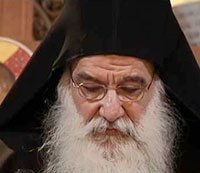
We are publishing a few extracts from an article by Fr Moses, in which he analyses the contemporary situation in Europe and Greece.
‘Greece has long been in a state of reanimation. The Greek language is being murdered every day. All around reigns the darkness of disintegration and a gloomy and violent national nihilism.
The desire to make money quickly and easily has led many into making tragic mistakes. Impatience and lack of seriousness are costing us dear. The thirst for riches has taken Europeans to extremes. Contemporary Europe is totally deChristianised.
The Vatican is reaping the fruits of deforming Christian teachings. The most horrific cases of child rape are taking place. Western people are running from ‘God is dead’ to Eastern gurus, desperately hoping to find at least some semblance of spiritual life. Some 2,000 branches of Protestantism are competing for a flock. The deChristianisation of Europe is on a very large scale and will lead to even more catastrophic consequences.
Europe has forgotten Christ and is embracing Islam. It seems as if it wants to commit suicide. Mosques are rising up in place of churches.
We are not against other religions, but we do want to defend Orthodoxy. Or do they now want to take away from us even this last right?
We look to the resistance of people who cannot be bought off. There are quite a few of them. It is time to stop being quiet. Our country needs spiritual regeneration.’
Source: http://www.agioritikovima.gr
Meeting of Native American Chiefs of the USA and Canada to Take Place in Moscow
Pavel Sulandziga, Chairman of the Working Party for the Development of the North, Siberia and the Far East in the Russian Parliament, has announced an extraordinary meeting in January 2013. It will take place in Russia and is between the chiefs of the Native American tribes of Canada and the USA and native leaders worldwide.
Sulandziga added that the association of indigenous peoples of the North, Siberia and the Far East had sought contact with native Americans for a long time to work together. Now, for the first time ever, they had invited an outsider, himself, to their Chiefs’ Council, which takes place on 21-22 December.
He plans to speak there on two themes. Firstly, he will touch on establishing cooperation and joint action. Currently, he is the chairman of the working party on international co-operation between the indigenous peoples of Russia and other countries in the Russian Parliament. His party works in a number of fields related to the development of indigenous peoples. This includes education, youth culture, self-government, cultural development and other matters. Secondly, he will talk about the Evenk people, since the Sioux Chiefs’ Council voiced its support for them.
Sulandziga is currently working on the visit to Russia of a number of Native American chiefs from the USA and Canada, as well as the leaders of indigenous people from other countries. Willie Littlechild, the Honorary Chief of the Crees from Alberta in Canada, Aali Kirskitaua, vice president of the Sami Parliament, and Henry Harrison, chief of the Thabas tribe from Alaska, have already confirmed their participation. They will come to Russia in mid-January, for a meeting of indigenous peoples for a joint discussion of problems and cooperation.
12 December 2012
Voice of Russia World Service Link
2013: Challenges before the Church
As 2012 draws to a close and we enter 2013, we both look forwards and look backwards. 2013 is the 1700th anniversary of the Edict of Milan and the 400th anniversary of the House of Romanov. This will be followed by other years commemorating momentous centenaries: 2014, the centenary of the outbreak of the First World War; 2017, that of the Revolution, the immediate entry into that War of the USA, the British agreement to found the State of Israel and the Armenian genocide – all within a few months of each other; 2018, that of the martyrdom of the Russian Imperial Family and the end of the First World War; 2019, the Treaty of Versailles, whose injustices made the next German War inevitable.
We recall how with every generation, every 25 years since 1914, history has been patterned by momentous events. 1914, the First War and the European suicide; 1939, the second part of that suicide and the Western Slav and Jewish holocaust; 1964, the social revolution and the Western abortion holocaust; 1989, the fall of the Berlin Wall and the Soviet Empire, leaving only one Superpower, and all the consequences of this, good and bad, for Eastern Europe, Afghanistan, Iraq, South Africa, Northern Ireland, the EU, China and the Muslim world. We wonder what the year 2014 may bring.
For the Russian Orthodox Church, the past 25 years have brought freedom, renaissance and unity. Over 80% of the multinational population of the Russian Federation, the Ukraine, Belarus, Moldova and Kazakhstan is Orthodox. 164 million people confess the Russian Orthodox Faith, 75% of the total.
Although concentrated in one seventh of the world, the Russian Orthodox Faith is confessed by sixty-two nationalities, in Japan and China, in Estonia, Latvia and Lithuania, in Central Asia, and, via the Russian Orthodox Church Outside Russia, throughout the whole world. This has meant that the thirteen other far smaller Local Orthodox Churches, many of which have suffered spiritually bruising and compromising Westernisation, are now inevitably looking to the Russian Orthodox Church for global Orthodox leadership in the globalised world.
However, there are also great problems.
Inside Russia, the Church has been subject to a year of persecution by renovationism. This renovationism has often been supported ideologically by the writings of various, at present fashionable, schismatic Russians from the emigration in France and the USA, who refused to remain faithful to the Russian Orthodox Church Tradition. However, that renovationism is only a front and has a much deeper political aspect.
Openly supported by the Western Powers, their intelligence agencies and their so-called ‘NGOs’, remaining Soviet-style atheists have wanted to destroy the Church, exploiting both vestiges of hopelessly old-fashioned Soviet ideology and fashionable anti-Christian Russophobic Western ideology, exploiting the naïve and the satanic. Steeped in the ideology of Russia’s anti-Russian wreckers, Gorbachov and Yeltsin, they are anxious that the Church is beginning to influence the Russian State for good, bringing it back to Christian values. Ths, they have wanted to slander the Patriarch, the clergy and Church teachings. Their devilish intentions have not succeeded.
The demographic problem also remains profound in all Orthodox countries, regardless of whether they are in the EU or outside it. Until the States concerned can provide decent and affordable conditions in which mothers can give birth to and bring up children, supported by responsible fathers and husbands, this demographic problem will deepen. ABC, Alcoholism, Abortion and Corruption, continue to ravage all the Orthodox countries: Greece, Cyprus, Bulgaria, Serbia, Montenegro, Macedonia, Romania, the Ukraine, Belarus, Moldova and the Russian Federation itself.
Internationally, there is the threat from the Muslim world. The Western-exploited political protests in Bosnia, Kosovo, Tunisia, Egypt, Libya and especially the war in Syria could easily spill over. Syria is virtually a neighbour of Russia. The situation in the nearby Caucasus remains fragile. Central Asia, bordering Afghanistan, could easily be affected. Here the West is playing with fire, risking ‘blowback’ from its meddling.
Then there is the missionary challenge. China, soon to become the world’s greatest economic power, is on its way to becoming the largest Christian nation on earth. It must become Orthodox, overcoming the facile errors of the widespread semi-Christian Western schisms, which are all but dead in the spiritually bankrupt Western world itself. Since the apostatic West has little interest in the real words of Christ and His Orthodox Church, let the East take up the yoke that is light.
The solution to economic and demographic problems and missionary challenges is to restore the Orthodox Christian Commonwealth, Romaiosini, Holy Rus. The embryonic Eurasian Union, set to overtake by far the stagnant and bankrupt EU, is the starting point for this. We would expect Orthodox countries, which have fallen into the EU temptation, partly because of the Russophobic reaction to the oppression of the old Soviet Empire, to withdraw from the German-run EU Europe or be ejected from it in the coming years.
A new generation of unprejudiced politicians in those countries will judge if today’s Russian Federation is deSovietised and can therefore be trusted. Their countries will need the support of the new Eurasian Union – the Russian Federation, Kazkhstan and Belarus. This Union could spread its protective influence into Eastern Europe (to the Ukraine, the Baltic States, Poland, Hungary, Slovakia and Bosnia in particular) and the Middle East, where Orthodox minorities live.
There are many temptations, many failings, many weaknesses and many attacks on the Church to come. The Orthodox Faith has to be preached worldwide before the end – and we have only just started. All the great days and the great challenges are before us. We are only setting out on a long and huge road. The real revolution, the spiritual one, is yet to come. May the grace of God guide us.
30 November /12 December 2012
Holy Apostle Andrew the First-Called