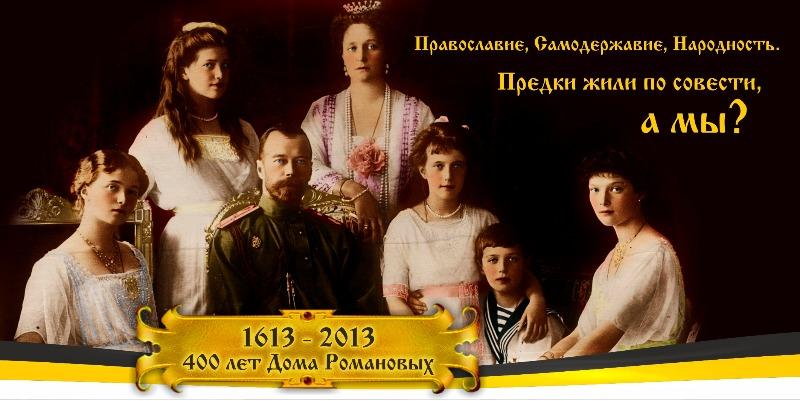
‘…On the days of their commemoration tens of thousands of the faithful, come to the scene of the sufferings of the holy passion-bearers, have asked for their help for our people in its spiritual rebirth, in the straightening of its historical paths.
Let us be firm in the hope that the Lord will make us worthy to overcome all the consequences of the tragedies, controversies and crimes of the 20th century, raising up Holy Rus from strength to strength.
May God fulfil the words of St John of Shanghai over Her, when in the menacing year of 1938 he said: Blessed art thou, O Russian Land, cleansed by the fire of suffering! Thou hast passed through the baptismal waters and now thou art passing through the fire of suffering and then thou wilt enter into thy rest’.
His Holiness Patriarch Alexis of Moscow
Nativity Epistle 2008/9
Introduction
As I prepare to go to Moscow from London, I wonder about the love-hate relationship between Russian and English people and between Russian and British governments respectively. As the Grand Duchess Olga, sister of the martyred Tsar, commented over fifty years ago, and hundreds of others before and since: ‘Many of my best friends are English and I love them dearly, but as for the policies of successive British governments towards Russia, they are contemptible’. As an Englishman, I can say the same. From the assassination by the then British ambassador’s friends of Tsar Paul I to the assassination of Rasputin organised by the awful Lloyd George, who then greeted the Revolution in public, or of attitudes of successive, contemporary British regimes, the role of successive British governments in trying to destroy Russia has been appalling.
Monday 27 May 2013
One of the first impressions of Moscow, beyond its ultra-spacious, ultra-clean and ultra-orderly airports, is shortage of space, dirt and disorder. The individualism that entered Russia from the West after the brutal and disastrous, Western-engineered collapse of Communism in the 1990s is such that most here today are interested only in their own lives and own well-being. This perhaps sounds good, almost like responsibility, but it ill conceals ill-concealed social ills and decomposition, discourteousness and cheating, lack of basic health and safety, packs of abandoned dogs that bark the night through and ubiquitous corruption – even more ubiquitous than in Western life. And, believe me, it is ubiquitous in Western life – even though the Western media like to deny that – no doubt because they are the most corrupted of all.
Self-interest is revealed in the contemporary Russian contempt for public life, traffic rules and parking (through the ironic lack of provision of parking space in by far the largest country in the world), contempt for the state of its Krushchev-era trains, post offices (parcels six months late!), roads, pavements, public land and forests where piles of rubbish are dumped, contempt for lifts (if they work) and the entrances to blocks of flats, where the masses live. Civic pride in Russia today must be at an all-time low. Potholes and mud, flooded roads when it rains, hot water that is suddenly cut off for days on end ‘for pipe cleaning’, wooden railway platforms out of Africa, the almost Third World appearance of many public buildings, the smoking at garages and tram stops, the drunks – often youngish – lounging by the side of the road, all witness to this.
Worse still, the contempt which the disabled are held in and the pocket-money pensions offered to them and to pensioners, who are humiliated and forced to beg to survive, speak of the contempt of the State for those who are not able to slave for its needs. It is no good that some political websites and nationalistic media sources suggest that all is well in Russia, whereas in the West, with its gay parades and empty and vandalised churches (all a reality, it is quite true), all is decadent. Such statements show a mixture of boorish xenophobia and provincial ignorance. If they were true, then there would not be the clamour in contemporary Russia to introduce ‘European standards’, which is more than just a desire to imitate, but discloses a real need and a real frustration at the lack of provision, that is, lack of pre-vision, that is, lack of planning.
All this dirt and disorder is real, but such criticisms are superficial and come from the spoilt inasmuch as they show no analysis or understanding of the deeper and essential problem of contemporary Russia. The real question is why all this exists and yet at the same time why the airports are superb (much better than most in the West), the airlines and the high speed trains excellent, why you can go to wonderful Tsaritsyno, the former estate of Catherine II on the southern outskirts of Moscow, or to Tsarskoe Selo, the beautifully restored estate of the martyred Tsar Nicholas II outside St Petersburg, and you can truly say that this is the best in the world. And I mean not in the Third World, not in the Second World, not even in the First World (a title so arrogantly and egoistically invented by and for the Western world), but simply the best in the world.
The answer to the above question lies, it seems to me, in what Russians often say of themselves, sometimes rather shockingly, that, ‘Russians need the knout’, that is, the whip. In other words, they say of themselves that we need to be whipped in order to make something of us, to ‘lick us into shape’. In other words, they are saying that ‘we are natural anarchists and need a strong man or woman (perhaps the historically-minded may think of a Varangian?) to rule over us’. However, this answer is, I believe, very badly formulated and shows a real lack of seriousness. In reality, only those with no self-discipline and no self-control need a whip. Those who can control themselves, who have self-discipline, need no whips. The problem then is how first to discipline and control ourselves, and not others. And that is a spiritual question.
Tuesday 28 May
I wrote yesterday that contemporary Russia is characterised by the absence of authority (in Russian, ‘bezvlast’e’, a word which suggest chaos, disorder and anarchy). Why is this dirt and disorder, this absence of authority so real? After all, the Western media’s favourite current myth is to insinuate that Russia is not a democracy, but a tyranny run by a dictator called Putin. I would suggest that this absence of authority is so real precisely because of the absence of legitimate authority. Yes, President Putin was elected by a majority of Russians – even allowing for local corruption, a majority greater than any Western politician could dream of having, and he is still more popular than any Western politician could dream of being, especially in a country where the street lights do not always work. However, in one sense, he does not have ‘legitimate’ authority.
The truth is that, despite such real popularity among a real majority (and real unpopularity among a real minority), and despite his PR machine, President Putin is only a man, a weak man. Spiritually and mystically, we must not forget that the President does indeed have no legitimate authority. We speak now about him not in the vulgar Western sense of him having ‘no legitimate authority’; Western hatred of him is based only on envy, the desire to steal Russia’s natural wealth, land, oil, gas and timber, the same that fatally attracted Napoleon, the Kaiser, Hitler and today the USA. We speak of the President’s lack of authority spiritually and mystically. There is only one legitimate authority in Russia and that is the authority of the Tsar, interrupted by the coup d’état of March 1917 and assumed temporarily by the Sovereign Mother of God.
The Holy Lady is patiently waiting for that time when Russia will through repentance be worthy of an earthly Sovereign, a new Tsar. Then there will no longer be this dirt and disorder, this absence of authority. Then there will be no need for the knout, there will be respect for an example set from on high – not just by a Tsar, but by the knowledge that, unlike in the PR-driven, media-driven and mob-driven pseudo-democracies of the West, above the Tsar reigns Almighty God. If the people are not worthy of a Tsar, then he will be taken away from them – as before. And instead there will either be bezvlast’e, primitive pagan Slavic anarchy, or else the knout, as was in the past imposed by Communism, or else in the future will be imposed again by some other equally awful ‘ism’, imposed from the West by fools, just as Communism was in 1917.
I go on now to think of the recent atrocity in London in which an off-duty soldier was horribly slaughtered in a revenge attack by two Islamist fanatics should serve as a lesson to the British government. Engaged today in the same policy as in the 19th century of supporting and arming fanatical Muslims against Christians (then in the Balkans, today in Syria and elsewhere), the risk is that the policy will rebound – as it has recently done. I think of this in Moscow because today a process similar to that in London over the last fifty years is taking place here too. Moscow is being invaded by Dagestan is, Chechens, Uzbeks, Kirghiz, Tadzhiks and others from the mainly Muslim Republics of the former Soviet Union. It is already facing racial tension, attacks by Muslims armed with knives or guns, and threats of mosque-building.
It is said that the Muslim immigrants, many of them here illegally through ubiquitous corrupt payments made to government ‘officials’, are doing the jobs that Russians do not want to do – or will not do without strong doses of vodka. The answer is simple: pay sober Russians proper wages for doing real jobs instead of £200-£300 per month, so that they can live in one of the most expensive cities in the world, and then they will do the work that needs to be done without vodka. Why is it that the Russian ‘authorities’ (as they inappropriately call themselves) cannot learn from the errors of the West? When every other citizen of Stuttgart, Hamburg, Marseilles, Lyons, Brussels, Antwerp, Amsterdam, Stockholm, Oslo, London and Bradford is called Mohammed or Fatima and every other church has been converted into a mosque, it will be too late. Learn now, not later.
Wednesday 29 May
What I wrote yesterday is not racist or Islamophobic; it is merely a pragmatic statement of reality. Christians and Muslims do not mix; the only way in which they can live together is separately. The Middle East knew this for centuries before the then Catholic West invaded peaceful but parallel communities of Orthodox Christians and Muslims in their jihadist Crusades, giving the Muslims the idea of using their old word ‘jihad’ in the Western sense of ‘Crusade’, that is to say, the sense of barbaric slaughter of all who are not of your own religion. Since then the now Protestant West has continued its barbaric slaughter, so that Iraq has now been all but deserted by its ancient Christians and is now on the verge of Somali-isation and Yugoslavisation – like Afghanistan and now Syria. The consequences are incalculable, that is, not apparent to the calculating, but obvious to those with common sense.
Moscow – and Russia – will be saved by not committing suicide. That sounds obvious, but in a world in which common sense is in short supply, it needs saying. This is the world that daily commits suicide through lack of common sense. When the mass of Muscovites – and the mass of Russians – go to church like Christians and so start treating each other like Christians, with courtesy, then the new Muslim immigrants will leave. In any case, by that time the Russian birth rate, instead of the Russian abortion rate (i. e. suicide rate), will be such that the work of even a single Muslim will no longer be needed. The same could of course be said of the West; but here it is probably too late because, unlike in Moscow, there are not enough faithful to stand up and speak common sense, let alone be heard by the few who are left with any common sense.
Recently I read how the stories of how the Red Army raped its way to Berlin were invented by Dr Goebbels. Then they were enthusiastically adopted by the Americans and British, some of whose warmongers were quite willing to continue the Second World War in 1945 by trying to take it to Moscow, just as Hitler had nearly done just before them. The West has always believed its own propaganda. But historians look at facts. The German Army, breaking into Russia in their unprovoked attack in 1941, raped as they went – one in two Wehrmacht soldiers claimed to have raped. Even worse, they usually murdered their victims after raping them. Millions of Belarusian, Ukrainian and Russian women and girls so became martyrs. It is reckoned in contemporary Russia that only 100,000 children were born from these rapes. The others were murdered in their mothers’ wombs.
Compare this to what happened in the West. In the occupation of England by the friendly American forces, over 10,000 rapes of English women took place. The half-American Churchill had this hushed up. When the Allies invaded Western Europe, rapes took place all over. The British, as a nation of calculating shopkeepers, paid for their sad pleasures in the suddenly swollen brothels of Brussels. The rapes of the Americans in Stuttgart and later in West Berlin are well-known. The French too took part. Yes, some Russian troops raped on entering East Prussia and Germany. In one three-month period 72 cases were discovered among a million soldiers of the Red Army. Many of these soldiers were shot as a punishment. In reality, by far the worst cases of serial rapes committed were the revenge attacks by freed Soviet POWs, whom the Germans had treated far worse than animals.
‘The Church inside Russia is just like the Church Outside Russia in that it is rich. I know I have been to two Cathedrals in Moscow and one in Washington’. The crass ignorance of such a statement sends us into fits of laughter. The concept that the Church Outside Russia is rich is in itself hilarious. But not only among us. I can think of one young priest not far from Moscow, married with two children, who is paid in chickens and eggs (which come first I do not know). Without his plot of land where he grows his own and without some part-time work (like the rest of us), he would not survive. No doubt, with time, he will build up his parish (like the rest of us). Maybe after thirty years or so (that is how long it has taken me), he will even be able to live as a priest without working on the side. The point is that you cannot ask for money from parishioners who are even poorer than you are. I don’t.
Thursday 30 May
Such were my thoughts yesterday on those twin human instincts – the instinct for survival (the gathering of the means to live), which is so often perverted into the amassing of money that you cannot take with you, and the instinct for the continuation of the race (sexual reproduction), which is so often perverted into sexual disorder. In the West, after, it is true, generations of hypocrisy, sexual disorder began to become acceptable fifty years ago. However, within a generation it had become perverted into the allowing and even encouraging of sodomy. Today, another generation on, the wild and seemingly almost untameable sexual forces that have been unleashed are set on pedophilia, the crime for which Christ said that it would be better not to be born than to commit, for it is the ultimate violation of holy innocence.
Today I am heading for Dmitrov, an ancient town some fifty miles to the north of Moscow. On the train I see my second and last Russian with a tattoo and red dyed hair; people here dress as in the West in the 1970s. (May Russia never ‘catch up’ with the West in this respect). It is important to see outside the capitals, to see reality. Otherwise you may end up with the same false impressions of those who visit London for a few days and imagine that they have seen England! Here you can see poverty, though you can also see prosperity. One of my first impressions is of the two statues on the central town square. One is of that Judeo-Russian monster from the Volga, whose corpse still wallows in its chemicals in Moscow, the other is of the Anglo-Russian founder of this town and also of Moscow, Yury Dolgoruky. They face each other. I just hope that Yury will cross the square one night and cut off the other’s head.
After visiting the slightly forgotten but beautiful little Cathedral in the town kremlin (fortress) with its huge earthen ramparts and lilac trees now out of flower, I visit the museums around it. In one of them there is an ancient wooden chalice from the Cathedral. It is tiny. I am reminded that Russia’s downfall came about precisely because of attitudes which led to the use of such tiny wooden chalices. They signify that in such towns as these, as all over Russia, Romania, Greece and elsewhere, Orthodox tend to be inert, passive, asleep. They say: ‘We are all Orthodox, therefore we won’t bother to go to church, to confession and to communion’. Yet it was this very attitude that led to the abolition of the Patriarchate, to icons being unnecessarily covered in gold frames and heavy, luxurious and uncomfortable vestments while the poor starved – and that led to Revolution.
Why is it that in Dmitrov, a pleasant town of 60,000, there are only three churches, though, true, the Cathedral does have three altars, though again one of the churches is only now being restored? The capacity of these three smallish churches cannot be much more than 600. This suggests that only 1 in 1,000 is practising here. That is few, but, honestly, it is enough to make the difference. Then I think of the state of the town. Why is it that in the largest country in the world, so it seems, all new blocks of flats have to be twelve or more storeys high? Why not limit them to, say, five floors? Or why not simply encouraging the building of traditional wooden houses with their own plots of land to grow and buy and sell food? Russian land is very fertile. Why not set up a modern railway network around Moscow instead of the desperate and archaic 1950s system they have at present?
In such a way overcrowded Moscow could begin to empty. Towns within a 200 kilometre (120 mile) radius of Moscow could be revitalised, 21st century railway infrastructure bringing them within an hour of Moscow. A whole region, two thirds the size of England and one third its population, could be renewed by an express train service. This would require investment from central government. And why does the government not send out official and incorruptible (good salaries and very harsh sentences for law-breaking) government inspectors to check on local authorities to see that they are implementing laws, abolishing dirty Soviet relics, their insignia and names, keeping public buildings clean and painted, renovating the archaic post office system and avoiding the dirt and disorder so common? Of course, those in small towns like this might pass the test fairly well, whereas in Moscow itself…
Friday 31 May
The one thing that marks out Russia today and gives hope to all is the New Martyrs and Confessors, led by the martyred Tsar and the holy Patriarch. Their resistance – and so our resistance through our veneration of them – to ‘the new world order’ is the only thing that stands between us and the end, that draws nearer every day. Here we each bear a heavy responsible for our canonical territory. For the Church inside Russia this means the vast territories and peoples of almost all of the old Russian Empire, together with China and Japan and probably in fact several other countries such as North Korea, Indo-China (Vietnam, Laos, Cambodia), Thailand, Iran, the Persian Gulf, Cuba, and Alaska, as well as witnessing to those in the canonical territories of the Patriarchates of Alexandria, Antioch and Jerusalem and of other Local Churches.
For the Russian Orthodox Church Outside Russia ‘canonical territory’ means the whole Western world, that is, Western Europe, the Americas, Australasia, and those in countries under their influence like Pakistan or Indonesia. Here two extremes must be avoided. The first extreme is that of setting up national ghettoes. This was done in the Church Outside Russia in the past, for example, in countries in Africa and also in Western Europe. Once Russian people left those countries through emigration or else died out, the churches died – for they had put down no roots among the native peoples. The second extreme is that of many a parish of the Church inside Russia, uncanonically outside its canonical territory, for example in France, England and North America. This extreme was of identifying so closely with the host country that the essentials of the Faith were forgotten.
The results were – and are to this day – in schism or in tiny parishes which have lost all their roots, so desperate was the Patriarchal Church to have any presence outside Russia during the Cold War. Today a heavy price is being paid for such errors of the tragically politicised past. Fortunately, in our own day, most Orthodox services are accessible, faithfully translated into several local languages. This means that there is no reason to be unfaithful. Moreover, inasmuch as those translations are mainly made idiomatically, there is no reason either why local people cannot enter into authentic Church life. Of course, parishes with such services are few, but they still exist and with God’s Will in time they will grow and spread. With time, God’s own good time, there is no reason why we cannot move forward together, spreading the word of authentic Orthodox Christianity in our canonical territory also.
All extremes are to be avoided. On the one hand, whether inside Russia or outside Russia, we have to be open to the world around us without creating some kind of closed ghetto. On the other hand, we must never abandon our principles, the essentials that make up our Faith. Especially at this time, this tension is both creative but also difficult. We have to avoid a closed nationalism, since we bear responsibility for the whole world, given that the other Local Orthodox Churches are basically mononational. As we have said already, faithfulness to the sacrificial blood of the New Martyrs and the declaration of faith of the New Confessors are essential here. There is no room for politics of either left or right, for any ism, only for God’s Gospel Truth, suffered and died for by the hundreds of thousands of the faithful New Martyrs and Confessors of the Russian Lands.
Of course, were I not an Orthodox Englishman, all this would sound hypocritical. After all, I live in a country where Henry VIII and Elizabeth I are still not everywhere recognised as the monsters they were and the statue of the English Lenin, the murderous bloodsucker Cromwell (1 million dead in Ireland?), stands outside Parliament in London. However, I am an Orthodox Englishman. Only today I have read that on Mt Athos, Greek monks are now praying for the restoration of a Tsar in Russia. I am reassured; I feared that I and a few priest-friends and faithful scattered in our network across Europe were the only ones. Russia is on a knife edge, it can go either way; but perhaps you have, by God’s Providence, to experience dirt and disorder, material poverty, so that you can make the right choice, the one that the spoilt West therefore cannot make.
Saturday 1 June
The recent visit of Patriarch Kyrill to China, a country forbidden to the Pope, shows a possible way forward all over the East. The fact is that the East has rejected the Christianity of the West. The Muslims will never forgive the Catholics for the Crusades. The Hindus will never forgive the British Protestants for their exploitation of them. As for the Chinese with their philosophies, Buddhist, Confucian and Taoist, they may yet learn the new Philo-Sophia, the love of the Wisdom of God, from Russian Orthodoxy. They will not learn from mononational Churches, like the Greek or the Romanian or the Serb. They will not learn from strange sects, Old Ritualists or the just plain wrong ‘True Orthodox’ – it is time to gather in, to harvest, not to crawl away into sects – but they may learn from our great, multinational Russian Orthodox Church.
Who knows, perhaps we shall yet see the Patriarch in Tibet. Tibet has a fine and venerable monastic tradition – what it lacks is Christ to fill the empty space there. Let us recall that had it not been for the bloodshed of Revolution, the Russian Church today would number one twelfth of humanity, instead of one forty-second. Of course, the challenges are huge. The East has rejected the West; therefore unless it falls into rabid and fanatical nationalism, like the Muslims and the Hindus often do, or into a blind imitation of the West, like South Korea and Japan often do, the only way forward is to adopt Orthodoxy, which looks both East and West. Orthodox Russia had to fall because its mere existence prevented the powers from establishing their new world order. But suppose we can re-establish our old world order again? Is it not also written that the salvation of Russia will come from the East?
Dirt and disorder or Holy Russia because where there is Orthodoxy, there is no dirt and disorder. That is the choice that Russia faces. Just try and imagine the streets of Moscow clean, with orderly traffic, without layabout drunks, without smoking, cursing, beggars and chaotic parking, without posters offering ‘credit’ glued up on every wall. The choice surely seems clear. Some Russians have definitely already chosen Holy Russia – and you can recognise them in the street at once. Most have still to decide on how they want to live. However, there is something even more disturbing than all this. This is that people in the West also have to decide which Russia they want to see. And let me make it clear to all Western people now; there is only this choice: dirt and disorder or Holy Russia. And there is something even more profoundly disturbing than this.
This is that there are many in the West who would prefer to see dirt and disorder in Russia. And there is here another serious point. This is that until the West itself recognises that Holy Russia is the only choice, it will itself not heal, but slide ever more rapidly into its own depravity and degeneration, into its own spiritual dirt and spiritual disorder. This recognition that its well-being depends on the well-being of Russia is called repentance for a thousand years of error; it is the repentance of the once Catholic West that time and again, through mercenary Teutonic Knights, Poles and Jesuits, has tried to destroy Holy Russia; it is the repentance of the once Protestant West that time and again, though British sectarians and US Evangelicals, has tried to destroy Holy Russia; it is the repentance of the once atheist West that time and again, through Napoleon, Hitler and today, has tried to destroy Holy Russia.
The ‘new world order’ is a propaganda myth. The Polish-American propagandist, Zbigniew Brzezinski, put it truthfully, when in February 2012 he spoke not of ‘a new world order’, but of ‘The Greater West’. That in truth is all the slogan of the ‘new world order’ is about – vulgar and greedy imperialist expansion. And we Russian Orthodox can also put it truthfully: The world is divided between two Romes, two models; pagan Rome characterised by the classical temple and masonic portals of the eighteenth-century White House in Washington (not a church in sight) and Christian Rome, characterised by the golden domes of the Kremlin in Moscow (only churches in sight). The choice is between pagan and Christian, Babylonian and Jerusalemic. But I would remind all in Moscow that the word Jerusalem means ‘City of Peace’.
Conclusion
The West never expected the Resurrection of Russia and has done its best to deny it, to hush it up. Just like the readily bribable Roman soldiers of old who were paid to ‘say that his body had been stolen by his disciples in the night’, its media have silenced the story of the Russian Resurrection. They did not expect Russia to rise from the dead after it, like Pilate, washed its hands of Russia in 1917 and through cowardice allowed its Crucifixion and indifferently looked on. And yet the Resurrection is here, however much it still has to be announced. During the dark hours of the 1940s, St Seraphim of Vyritsa – and I tell you this now, so that you will remember it then – looked out on the Gulf of Finland and saw many ships sailing in from many lands and prophesied: ‘The whole world will head for Russia to repent’. This means that there will be Orthodox priests of many nationalities giving the sacraments there.
Even so, come, Lord Jesus!
Archpriest Andrew Phillips
Somewhere over the Baltic
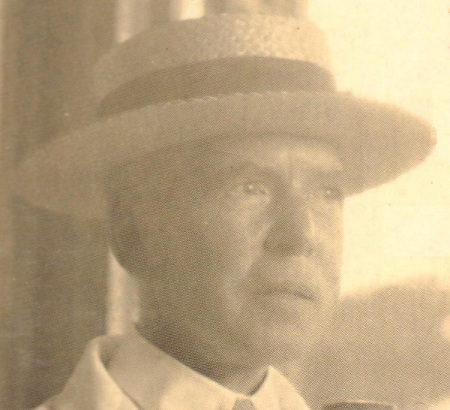 Charles Sydney Gibbes, for short Sydney Gibbes, was born 137 years ago, on 19 January 1876. In the 19th century this was the feast day of St John the Baptist, the voice that cried in the wilderness. His parents were called John and Mary – more English than that you cannot find. His father was a bank manager in Rotherham, just outside Sheffield, in Yorkshire. Amusingly, this would later be recorded by a Russian civil servant on Sydney’s residence papers in Russia as ‘Rotterdam’.